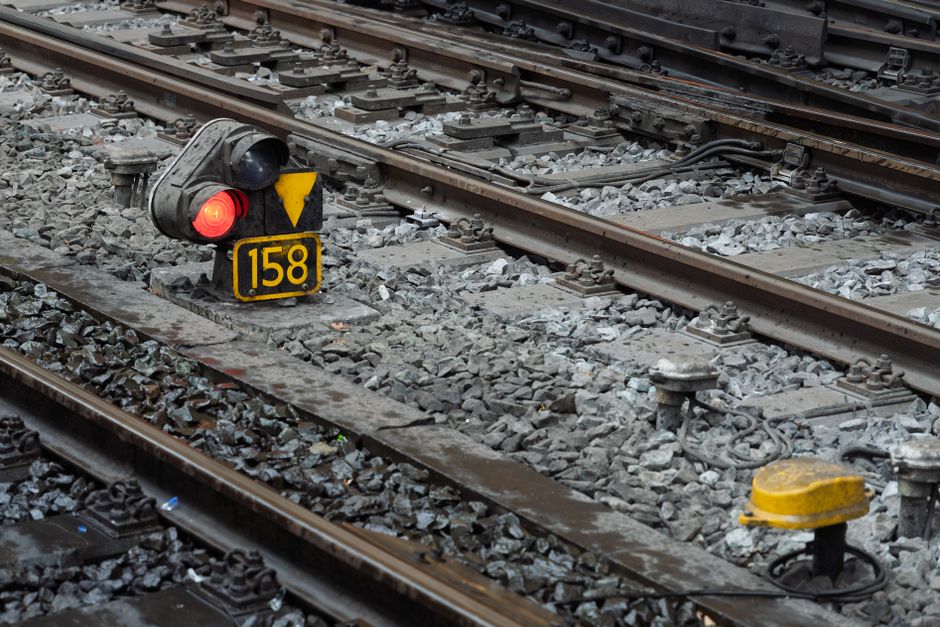
The signals that direct A and C trains through Brooklyn and Queens are nearly a century old. The MTA announced Thursday that it has begun replacing them, in a $1.9 billion project that the agency’s chair and CEO says is the largest of its kind in its history.
The work will install modern Communications Based Train Control, known as CBTC, along the A and C lines’ Fulton Street and Liberty Avenue corridors. It will cover 42 miles of track and 23 stations that together serve 350,000 riders each weekday, according to the agency. Contracts for the project were approved by the MTA board nearly a year ago.
The money comes from congestion pricing. The resignaling and track replacement are effectively funded in their entirety by revenue from the state’s program, which charges drivers a base toll of $9 to enter Manhattan below 60th Street.
The difference between old and new comes down to precision. Analog signal systems show where trains are on specific sections of track. CBTC lets dispatchers see each train’s exact location and speed, which allows the MTA to run trains safely closer together and, in turn, offer more frequent service.
MTA Chair and CEO Janno Lieber said in a statement that signal problems are the “number one cause of subway delays.” “No surprise considering the ancient relics we’ve been using to direct train traffic,” he said. “Thanks to this almost $2 billion project, we are going to be able to run more A and C trains faster, safer, and more reliably than ever before.”
Gov. Kathy Hochul tied the project directly to the toll. “Congestion pricing keeps delivering wins for New Yorkers,” she said in a statement, adding that upgrading the old signals is “a critical part of our plan to run better and more frequent subway service, shortening waits and slashing delays.” When the project is finished, she said, hundreds of thousands of A and C riders will benefit from “the world-class service on new, modern trains that New Yorkers deserve.”
The MTA points to earlier installations as evidence. Modern signals already operate on the entire 7 and L lines and on parts of the Queens Boulevard and Culver lines used by the E, F, M and R trains. On the 7, on-time performance rose from 68 percent to 91 percent after CBTC went in, according to the agency. On the E line in Queens, train speeds rose 10 percent once the new signals were activated.
The first phase of construction is modest in scale. The MTA will replace aging switches and 250 feet of track between the 104 St and 99 St stations in Queens. The announcement did not specify a completion date or detail how service might be affected during the work.
For riders on the A and C, the project promises something the lines’ famously long waits have rarely delivered: a signal system built to move trains more frequently rather than merely keep them apart.
Frequently Asked Questions
How much is the MTA spending on the A and C line signal overhaul?
The MTA is spending $1.9 billion on the project, which the agency says is the largest of its kind in its history. The money comes entirely from revenue generated by New York’s congestion pricing program.
What is CBTC and how does it improve subway service?
CBTC, or Communications Based Train Control, lets dispatchers see each train’s exact location and speed, unlike older analog systems that only show trains on specific track sections. This precision allows trains to run safely closer together, enabling more frequent service.
Which subway lines and stations are included in the MTA signal project?
The project covers the A and C lines in Brooklyn and Queens, including 42 miles of track and 23 stations that serve about 350,000 weekday riders. The work follows the Fulton Street and Liberty Avenue corridors.
How much has on-time performance improved after CBTC was installed on other lines?
After CBTC was installed on the 7 line, on-time performance rose from 68 percent to 91 percent, according to the MTA. On the E line in Queens, train speeds rose 10 percent once new signals were activated.
What is the first phase of construction for the A and C signal upgrade?
The first phase involves replacing aging switches and 250 feet of track between the 104 St and 99 St stations in Queens. The article does not give a completion date for this phase.

Leave a Comment