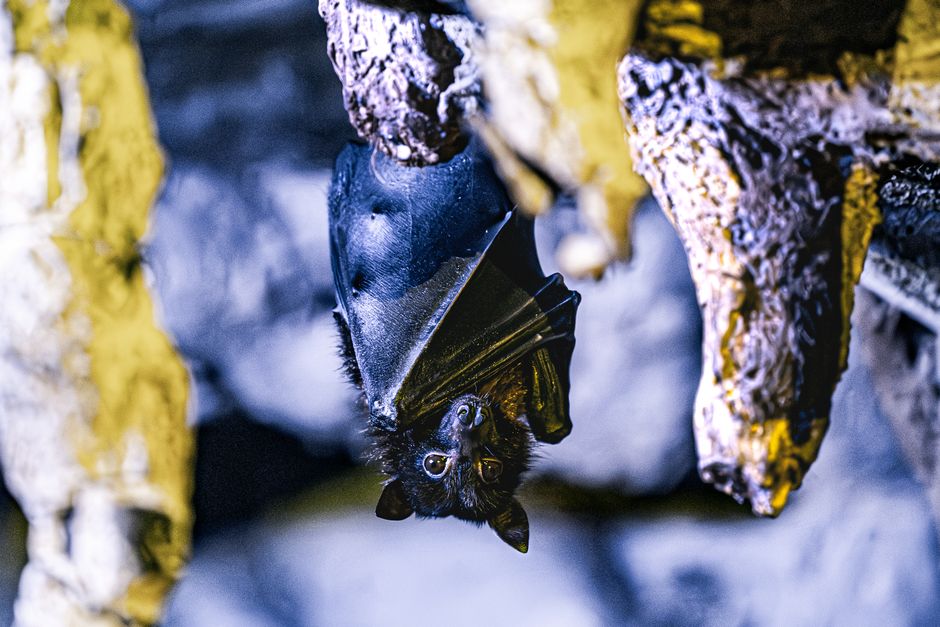
Halloween is five days away, and the bat, that stock figure of the season, is having its own week. Bat Week is underway, and New York state wildlife officials are using it to make a case that the animals deserve more than a cameo on a porch decoration.
The state Department of Environmental Conservation is urging outdoor adventurers to stay out of caves and mines during the colder months, when bats are hibernating. “That helps keep them safe and sound, and prevents them from using extra energy stores from being woken up too often, so that they can make it to spring and survive to the next year,” wildlife biologist Ashley Meyer said in a video posted on the department’s website.
The department says bats bring humans more benefits than risks, thanks to an appetite for insects. They help reduce mosquito populations, limit the need for pesticides on crops and in gardens, and may even slow the spread of invasive insects. Nic Comparato, a bat biologist and Rutgers University Ph.D. candidate, connected that work to the dinner table. “In places where you have healthier bat populations, farmers are able to use a lot less pesticide, and that actually does directly translate into more positive human health outcomes,” Comparato said, adding that upstate fields with healthy bat populations benefit the broader food system New York City depends on.
The city itself is bat territory, too. Comparato, whose research focuses on urban bats in New York City, said several species can regularly be seen here. “I would guarantee that most New Yorkers who have even walked by a park at night have probably seen a bat, but unless you know what you’re looking at, you would just assume it’s a bird,” Comparato said. The giveaway is the flight. Bats must flap constantly to stay airborne, which makes their path look zigzaggy or bouncy rather than smooth. “I say this with love, but bats look like they’re profoundly bad at flying – they’re actually really good at it,” Comparato said.
There is a catch for anyone inspired to go looking this week: bats get harder to spot as the weather cools, according to Comparato. Most of the bats seen in the city today roost in trees or in structures such as old buildings and cemetery mausoleums. Comparato leads bat walks through city parks during warmer months and said the walks have shown how readily New Yorkers relate to the animals. “Each bat species has its own set of strengths, each one has its own approach to living in the city, and in that way, they’re a lot like a lot of New Yorkers,” Comparato said.
The animals have also taken real losses. According to the DEC, white-nose syndrome, a fungal disease that has killed more than 90% of bats at some hibernation sites in the state, has threatened New York bats since 2006. Comparato said it decimated the city’s population of tricolored bats, a cave-hibernating species.
The DEC lists a few simple ways to help: limit tree removal during the winter months, plant pollinator gardens to attract the insects bats eat, and keep cats indoors so they don’t hunt bats.
As for the fear factor, Meyer said it is largely misplaced. Maybe less than a percent of bats out on the landscape carry rabies, she said, and the notion that they want to fly into hair or attack people is “absolutely not true. They want to avoid us as much as we want to avoid them.” Health officials still advise against handling bats and recommend seeking medical guidance after any possible contact with one.
Frequently Asked Questions
What is white-nose syndrome and how has it affected bats in New York?
White-nose syndrome is a fungal disease that has killed more than 90% of bats at some New York hibernation sites since 2006, according to the DEC. It decimated New York City’s population of tricolored bats, a cave-hibernating species.
Do bats carry rabies?
According to wildlife biologist Ashley Meyer, maybe less than 1% of bats carry rabies.
How do bats help farmers and reduce pesticide use?
Bats eat insects, and healthier bat populations let farmers use much less pesticide, which benefits human health and the food system New York City depends on, per Rutgers researcher Nic Comparato. Bats also help reduce mosquito populations and may slow the spread of invasive insects.
How can New Yorkers help bats?
The DEC advises keeping cats indoors, limiting tree removal in winter, and planting pollinator gardens. It also urges people to stay out of caves and mines during colder months so hibernating bats are not disturbed.
How can you tell a bat from a bird when flying at night?
Bats must flap constantly to stay airborne, so their flight looks zigzaggy or bouncy rather than smooth. Most New Yorkers who have seen a bat at night likely mistook it for a bird.

Leave a Comment